Our Lady of the Waters and the Wye
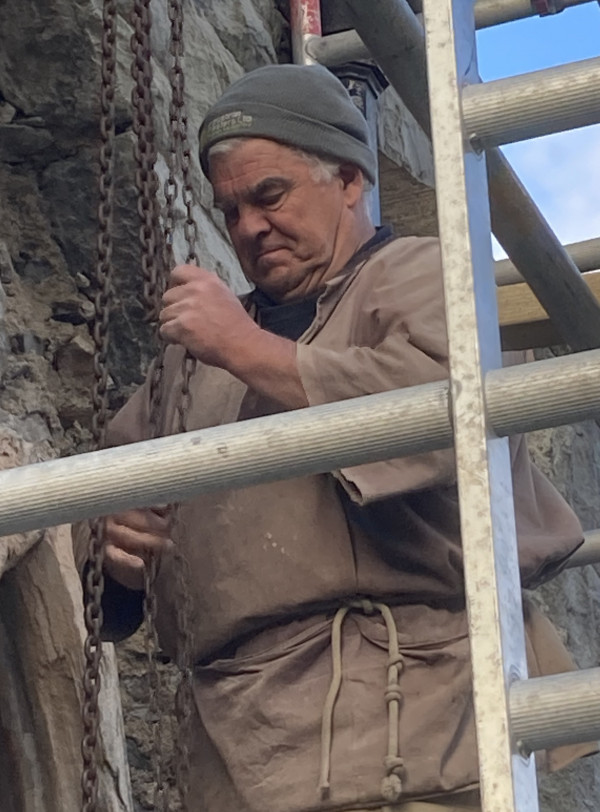
In between the two phases of the window restoration at St Margaret's Catholic church in Lerwick Shetland, I took three weeks off to paddle my statue of Our Lady of the Waters and the Wye down the river Wye and later for the first time down the river Spey in the Cairngorms. Far from taking time out to rest, this was a period of considerable exertion and organisation of logistics.
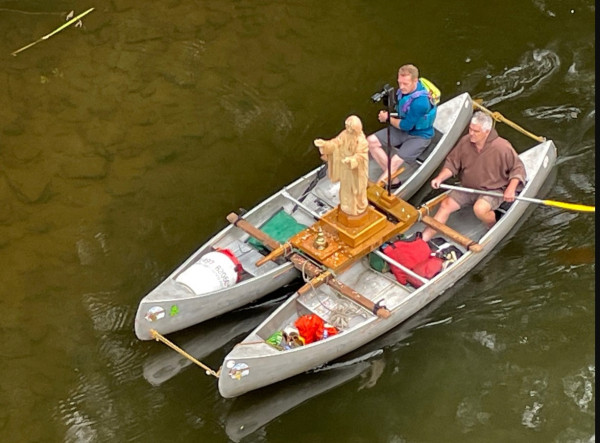
"Our Lady of the Waters and the Wye" is a four-foot wooden sculpture of the Virgin Mary used as the centre piece for an environmental river pilgrimage. The campaign was created to raise awareness about severe pollution in the River Wye, which spans the border between England and Wales.
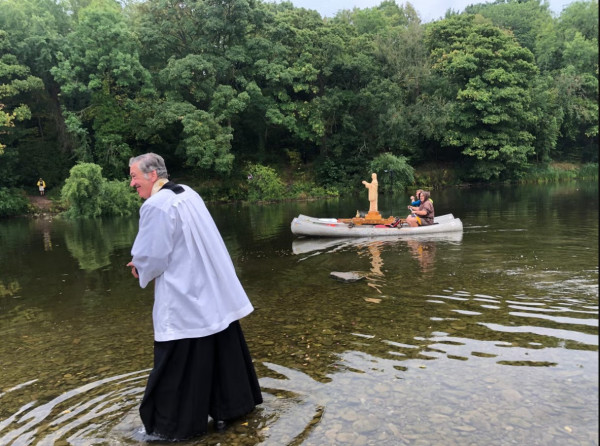
This project started in early 2022 when Fr Richard Williams, then parish priest of St Mary's Hay on Wye (the famous Welsh town of books and its literary festival), suggested to me over coffee by the river that he had a vision of seeing a statue of Our Lady going down the river 'cleansing' the polluted water. I was able to translate that vision into reality by carving a four foot two inch wooden statue and organising the boats and route logistics. As an experienced mariner and former oarsman at Monmouth School I was already familiar with the river Wye and also deeply concerned about its polluted state.
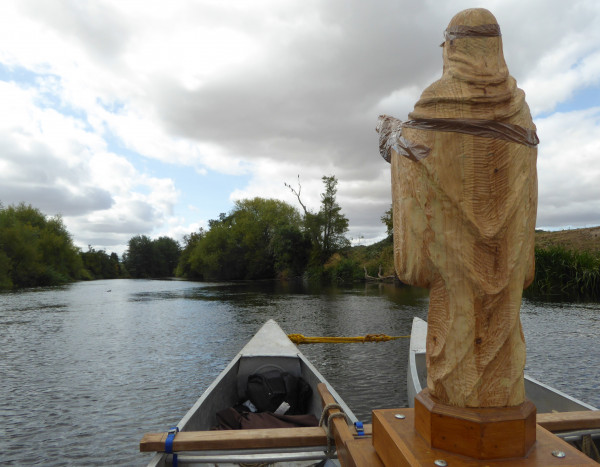
The statue is based on the life size marble Apparition statue of Our Lady which stands at the old monastery of Capel y ffin the Black Mountains above Hay on Wye. A small community of Anglican Benedictines was founded there in 1870 by Fr Ignatius. In August 1880 members of his community and locals witnessed several apparitions of Our Lady. In 1905 a marble statue was set up at the site of the Apparition beside the now holy rhubarb bush.
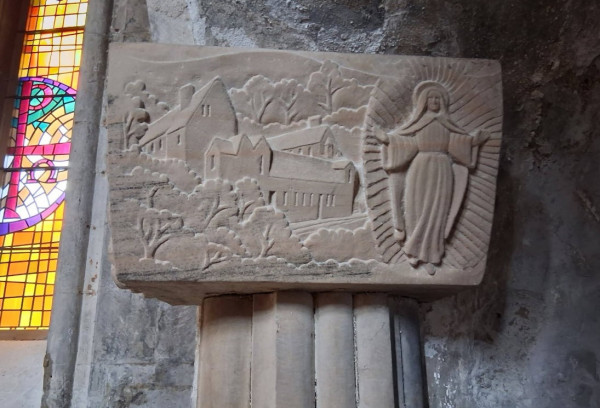
Carving by Philip Chatfield of the apparition of Our Lady at Capel y ffin, Pluscarden Abbey.
The statue it fixed to a carrying cradle by bolts, so she can be detached as required. The cradle is mounted to two cross beams that are part of the method by which the two fourteen foot Canadian aluminium canoes form a stable catamaran. This configuration has never let me down.
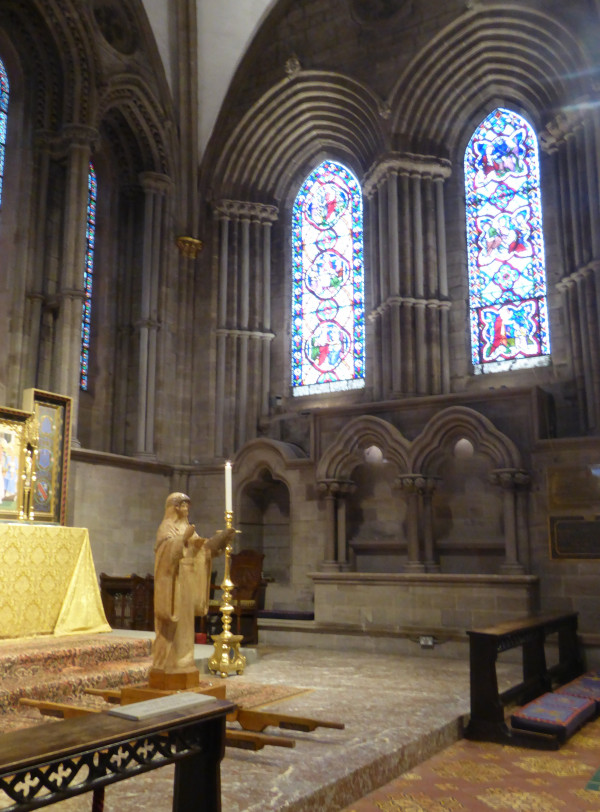
Our first journey down the river Wye began on the 15th August 2022 making a five day 84 mile journey all the way to Monmouth. We stopped at key locations on the route including Bredwardine, Hereford Cathedral, Hoarwithy, Ross on Wye and then to Monmouth. At each stop pre-arranged church services were held featuring bell ringing and choral events, a highlight being Marian plainchant sung at the 12th century church of Moccas by monks of Belmont Abbey led by Abbot Paul Stonham OSB.
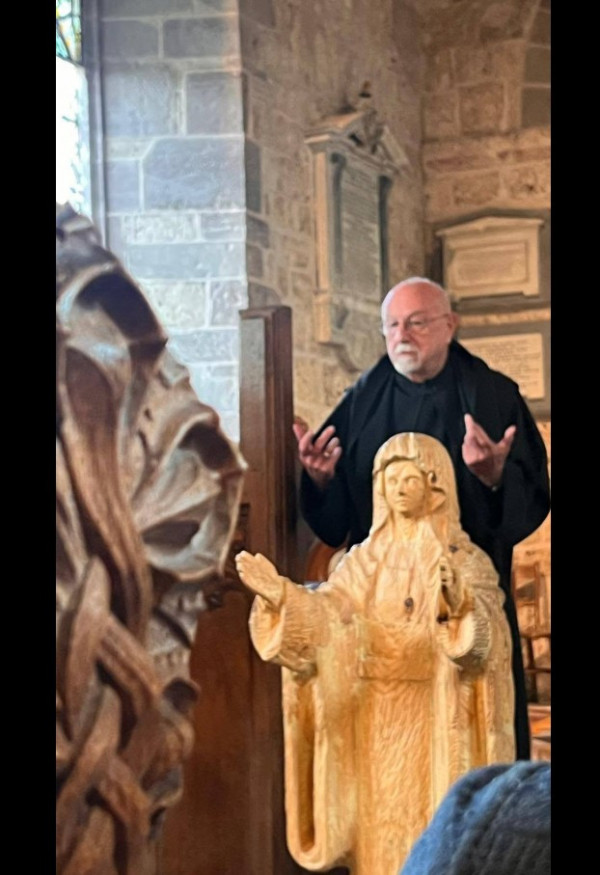
The project was initiated under the Save the Wye banner to protest a catastrophic crash in the river's biodiversity. Campaigners use the pilgrimage to highlight three primary polluters:
Chicken farm slurry: Run-off from massive local poultry units that overflows into the ecosystem.
Phosphate overload: The river receives roughly 3,000 tons of phosphates annually, vastly exceeding its 300-ton capacity.
Sewage & Fertilisers: Human sewage overflows and agricultural fertilisers that suffocate river plants with "pea soup" algal blooms.
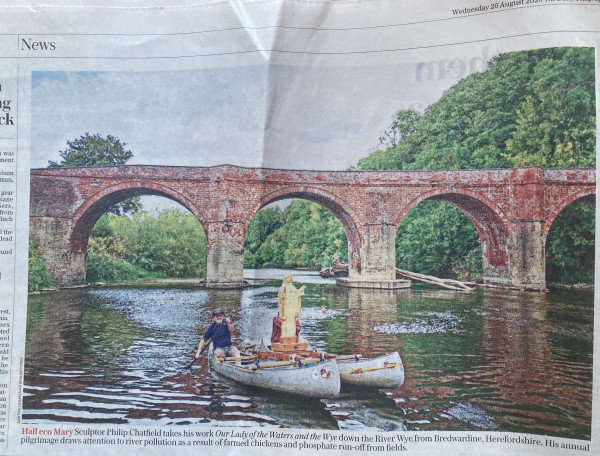
Coverage in the Daily Telegraph, 26th August 2026.
We started this river pilgrimage in 2022 as a one off event but somehow it has become an annual event. However in 2023 the statue was taken by road instead of by boat due to the river being in my opinion too dangerous as the water level was too high. Since then we have managed to continue the journeys but the river levels have often been quite low.
River Spey
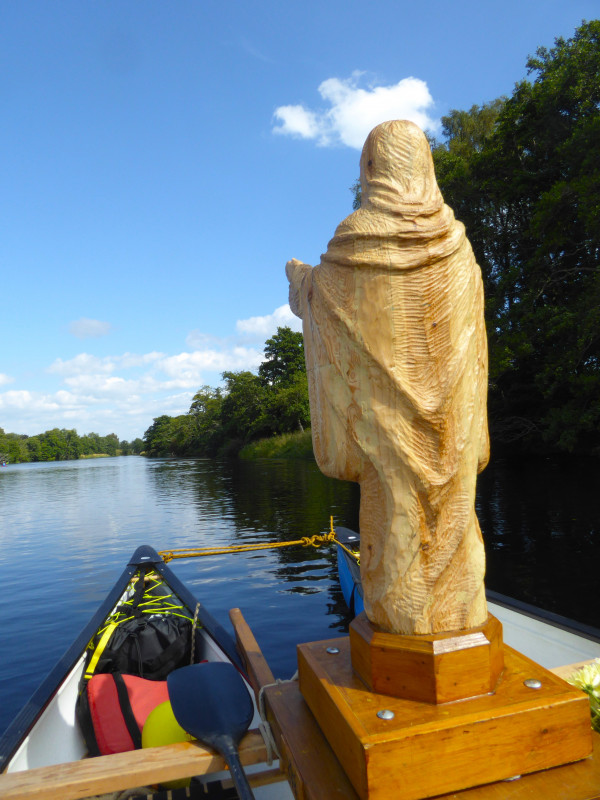
This year were were invited to bring the statue all the way up to Scotland in order to highlight the pollution of the river Spey in the Cairngorms. As I was going to be already en-route back to resume work in Shetland, I was able to work out the logistics to make it happen by hiring two plastic canoes from a company at Newtonmore near Kingussie.
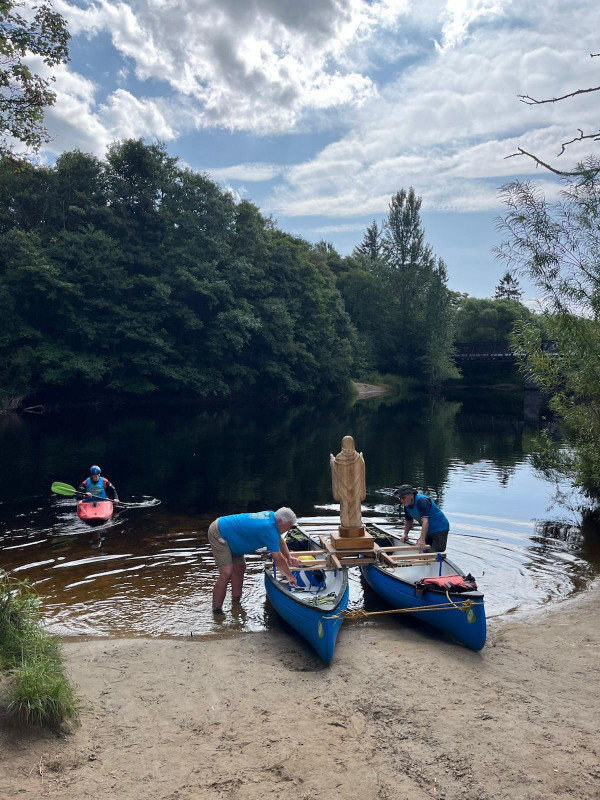
The statue was brought up from Wales by car by Prof Rachel Jenkins our on shore organiser, via the West coast. Upon arrival, the statue was welcomed by Fr Andrew Harden and set up for the night in St Aidan's Roman Catholic church in Aviemore.
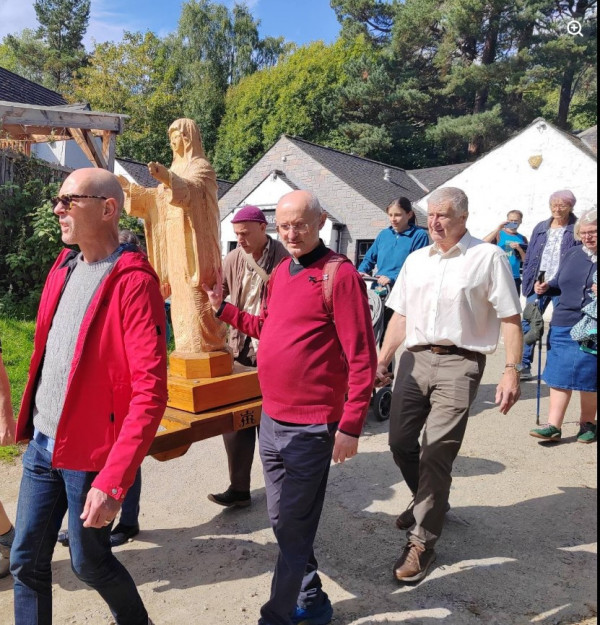
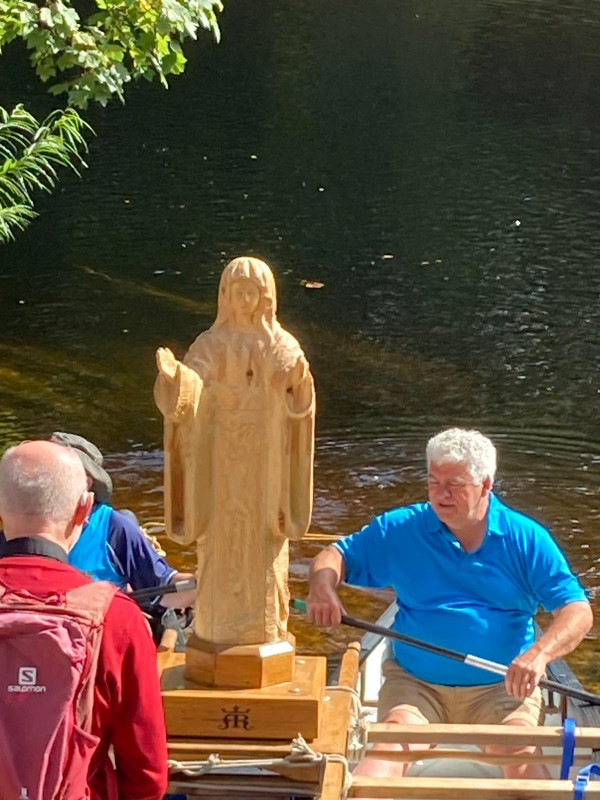
The following day after Mass the statue was carried down to the Spey for the launch. The short passage down the river took us down to the now closed Kirk at Kinkardine near to Loch Pityoulish and now belongs to harpist and land owner Harriet Einsiedel. The site dates back to the 7th century when a Celtic church was likely founded by missionaries from Iona. An evening of song, music and situation reports from local environment experts was held. This written about by a national newspaper and local press.
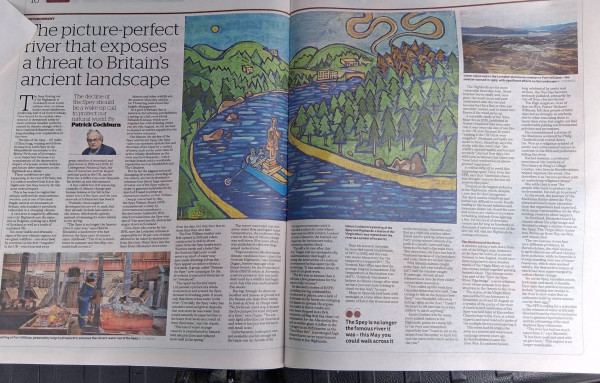
Coverage in the i newspaper.
The following day was a longer paddle down the Spey to finish as Grantown on Spey passing close to the heritage Strathspey steam railway. I enjoyed paddling beside the forlorn bridge piers that once carried the 'Whisky Line' railway to Nethy Bridge and on up to Aberlour and beyond.
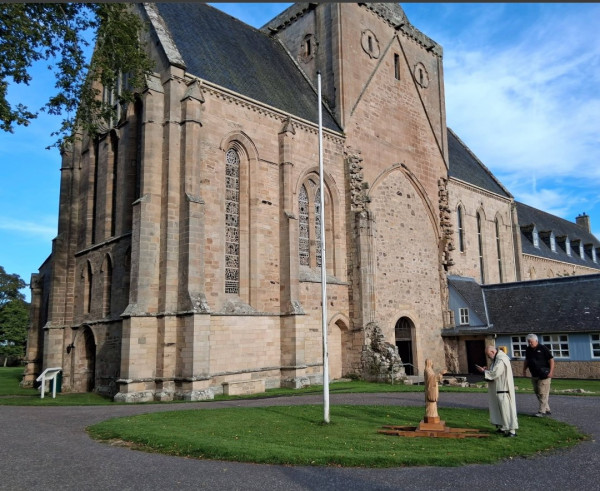
The following day saw us transport our Lady of the Waters and the Wye over the Dava Moor to Moray in time to Vespers at Pluscarden Abbey, where Fr Ambrose of St Margaret's Lerwick was formerly a monk, and where I have undertaken a considerable amount of work for the new St Joseph Ladies' Retreat House.
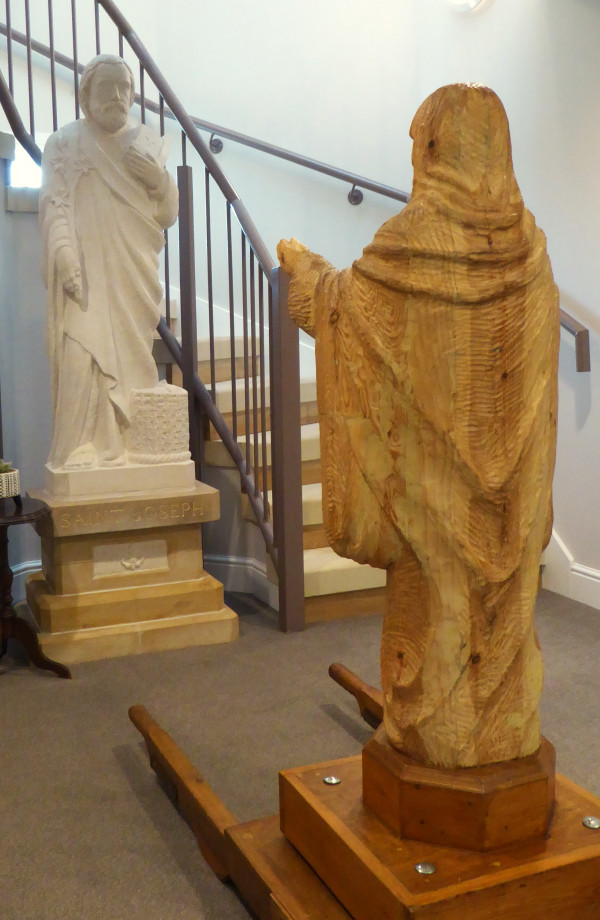
It was wonderful to see the statue at Pluscarden and also introduce the wooden figure of Mary to the stone carved statue of Joseph. A truly unique moment. However the stand out memory for me was being able to carry the statue of Mary on its cradle to the grave of Dom Asaph Harris OSB.
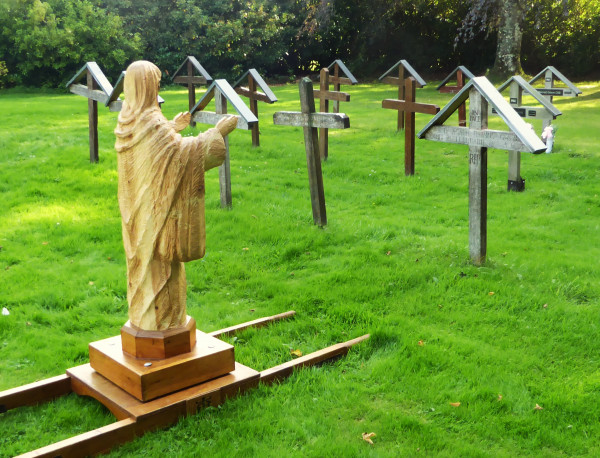
Dom Asaph Harris was a former member of the Anglican Benedictine community at Capel y ffin high above Hay on Wye in the Welsh Black Mountains. He became Superior to the community there after the death of Fr Ignatius. He was also present when the marble Apparition statue was dedicated beside the rhubarb patch in 1905. Asaph was one of the Pluscarden pioneers in 1948 sent up from Prinknash to restart monastic life at the then Priory. He was the first to die there and placed to rest in the Abbey cemetery. My wooden statue, placed on his grave meant a lot to me as I have a particular devotion to Dom Asaph. He had journeyed from Capel y ffin, was one of the Catholic converts on Caldey in 1913, moved on to Prinknash and thence to Pluscarden. Some of the bells at Pluscarden are the original bells from Capel y ffin and were present in 1880 at the apparition time. So the wooden statue spent some moments on the grave of Dom Asaph, heard the old bells ring for Vespers and for me it was an emotional moment as a monastic wheel had turned full circle.
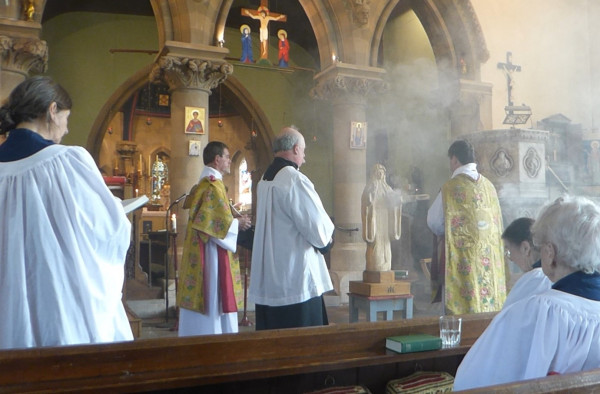
The statue eventually returned to the shrine chapel at St Mary's Hay on Wye and I returned to Lerwick from Aberdeen on the freight ship MV HILDASAY to resume work on the window of St Margaret's. Tomorrow I leave Shetland once again on MV HILDASAY and will be able to spend a few days resting at Pluscarden abbey before heading south to resume my next stone working duties. It has been a joy to have worked in Shetland.
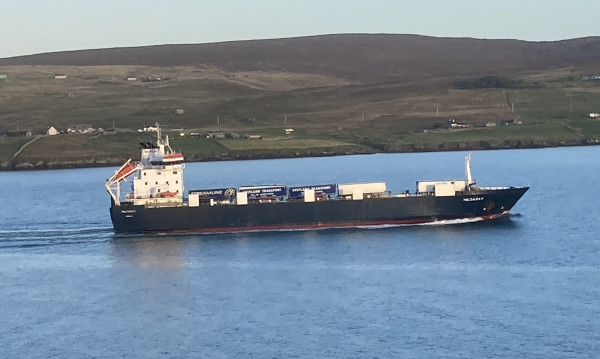
The MV Hildasay conveying Philip back to the Scottish mainland through the South Mouth of Lerwick Harbour, 1st October 2026.
Philip Chatfield, September 2026.